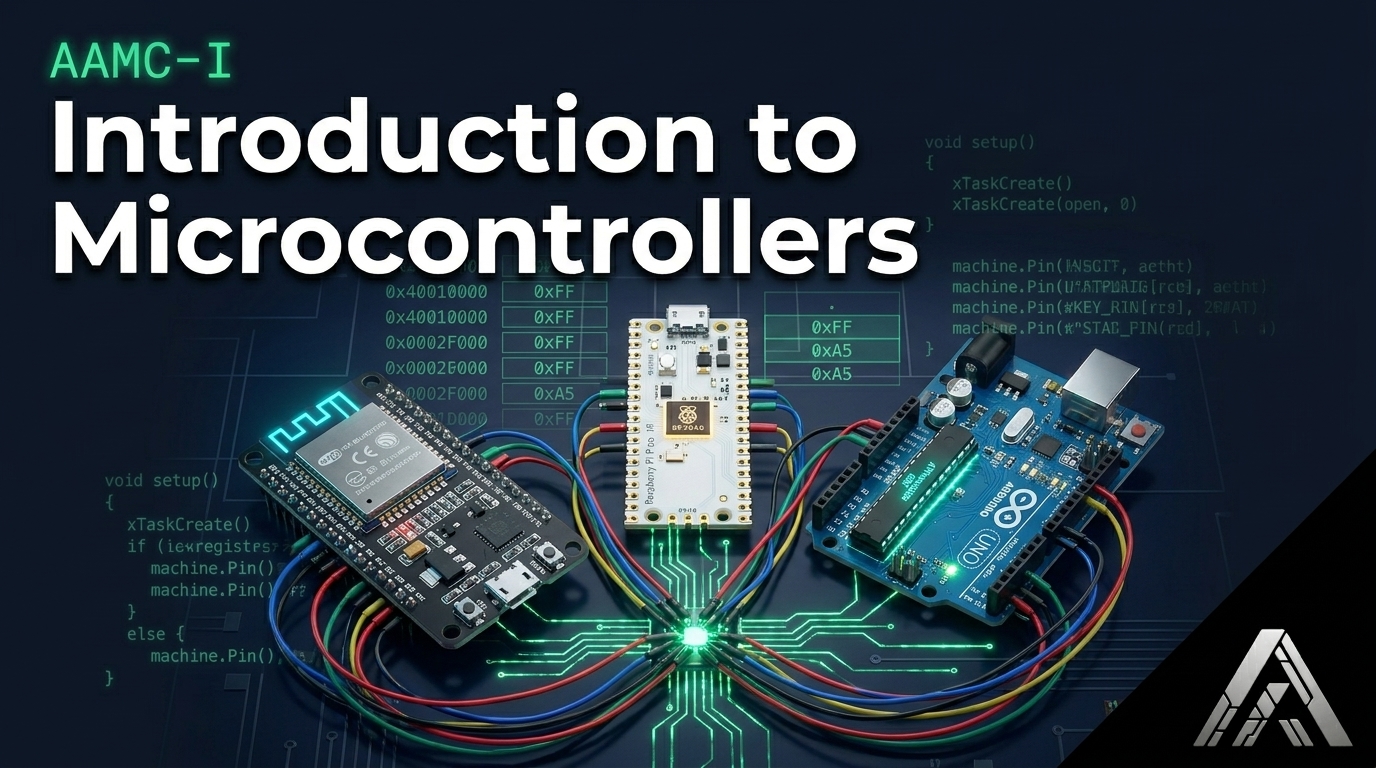
Introduction to Microcontrollers

Provided By
Prof Obaid Shah
What is Introduction to Microcontrollers?
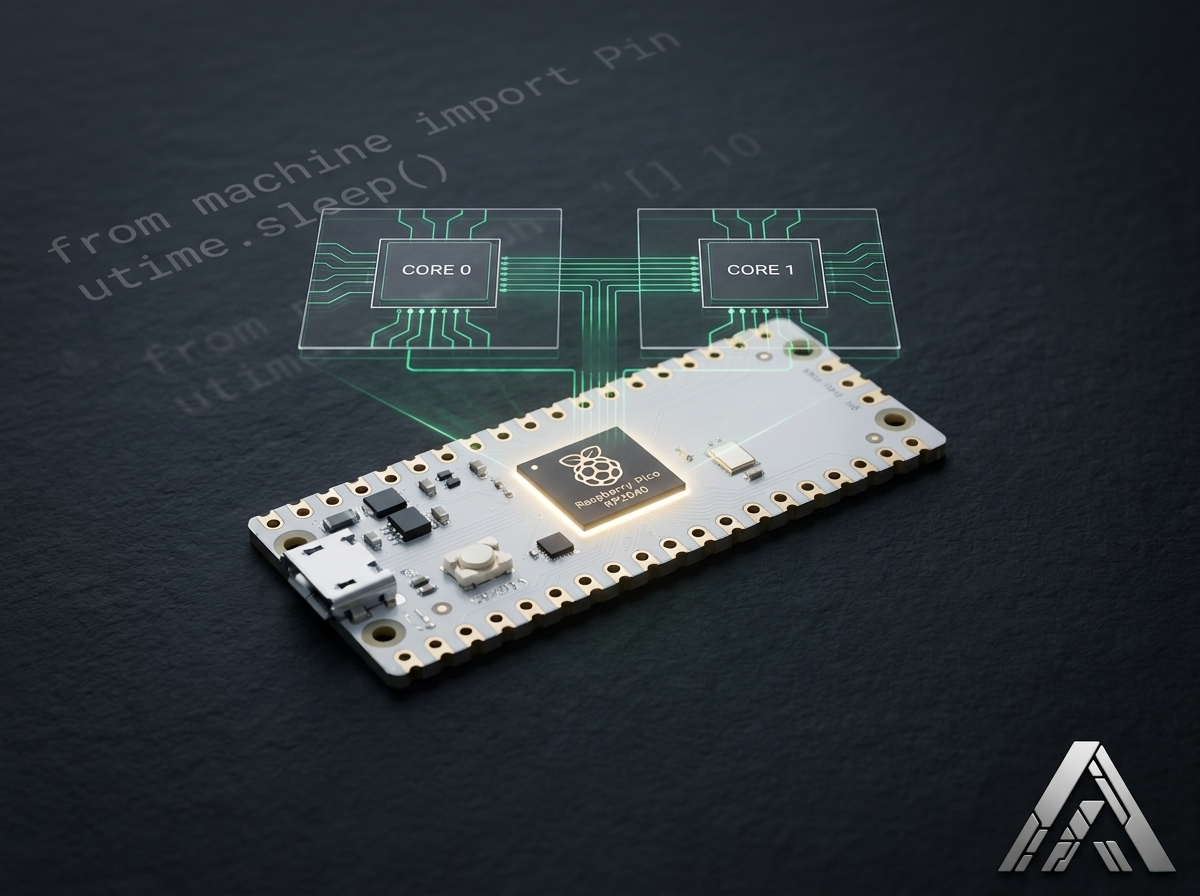
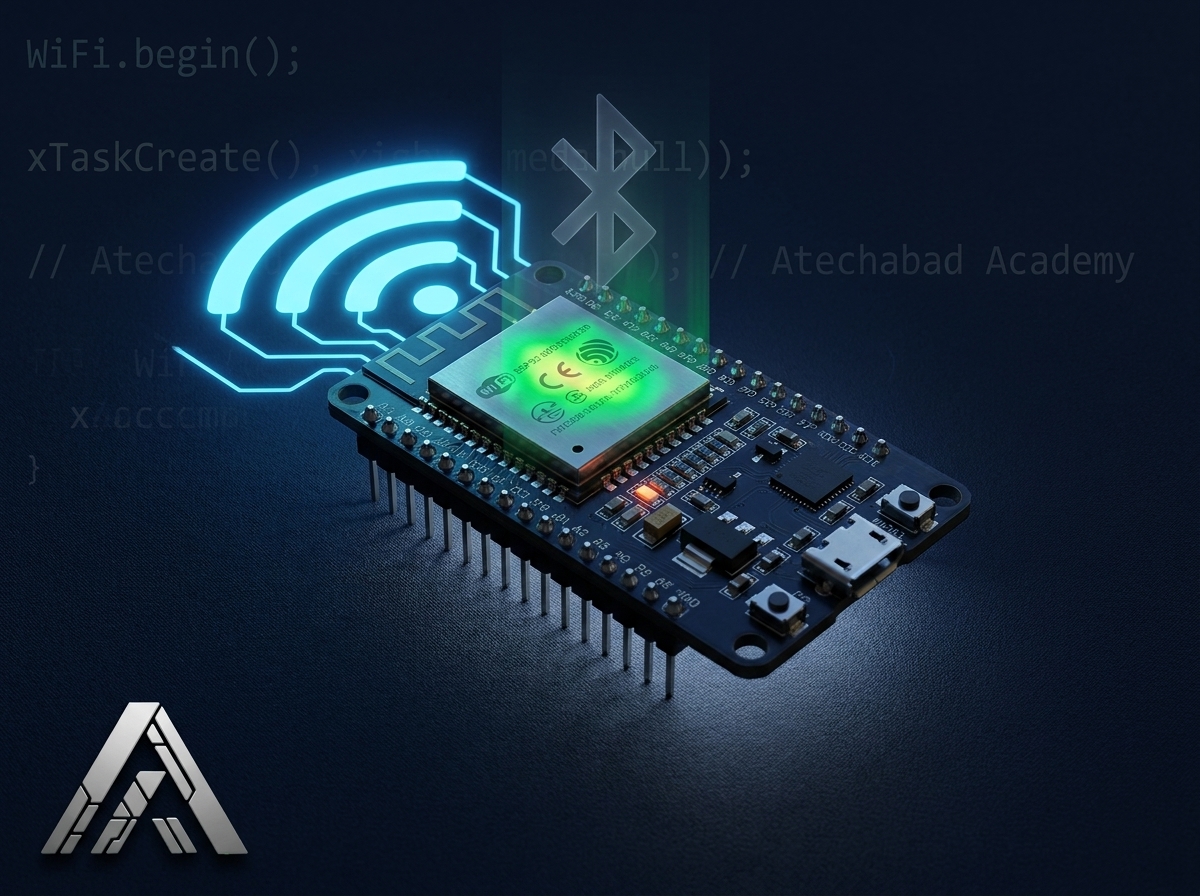
Introduction to Microcontrollers is a foundational engineering course that explores the internal architecture, programming, and real-world applications of microcontroller units (MCUs). Unlike Arduino courses that abstract the hardware, this course goes under the hood — teaching students how microcontrollers actually work at the register level, how peripherals are configured, and how embedded firmware is written professionally.
What You Will Learn:
- Understand the internal architecture of a microcontroller (CPU core, memory, peripherals)
- Differentiate between microcontrollers, microprocessors, and SoCs
- Learn memory-mapped I/O and register-level programming
- Configure and use GPIO, timers, ADC, and UART at the hardware level
- Understand interrupt-driven programming and NVIC
- Write embedded C firmware for ARM Cortex-M or PIC/AVR microcontrollers
- Understand clock systems, power modes, and watchdog timers
- Interface microcontrollers with real-world sensors and actuators professionally
Who Is This Course For?
Ideal for BS Computer Science, Electrical Engineering, and Electronics students who want to go beyond Arduino abstractions and understand embedded systems at a professional, industry-ready level.
Module 1 — Introduction to Embedded Systems What are embedded systems, microcontroller vs microprocessor vs SoC, real-world applications, popular MCU families (AVR, PIC, ARM, STM32).
Module 2 — Microcontroller Architecture CPU core, Harvard vs Von Neumann architecture, memory types (Flash, SRAM, EEPROM), peripheral bus structure, memory map.
Module 3 — GPIO & Register-Level Programming Memory-mapped I/O, data direction registers, port registers, bit manipulation in C, configuring GPIO without libraries.
Module 4 — Clock Systems & Timing Oscillator types, clock prescalers, system clock configuration, timer/counter modules, PWM generation at register level.
Module 5 — Interrupts & NVIC Interrupt vectors, ISR writing, NVIC configuration, interrupt priority, external and timer interrupts, interrupt-driven design patterns.
Module 6 — Analog to Digital Conversion ADC architecture, resolution and sampling rate, reference voltage, ADC registers, reading analog sensors at hardware level.
Module 7 — Communication Peripherals UART configuration at register level, SPI and I2C hardware peripherals, baud rate calculation, data framing.
Module 8 — Power Management & Watchdog Sleep modes, power reduction registers, watchdog timer configuration, low-power embedded design principles.
Module 9 — Capstone Firmware Project Design and implement a complete embedded firmware project — sensor interfacing, interrupt-driven logic, UART data reporting, low-power operation.