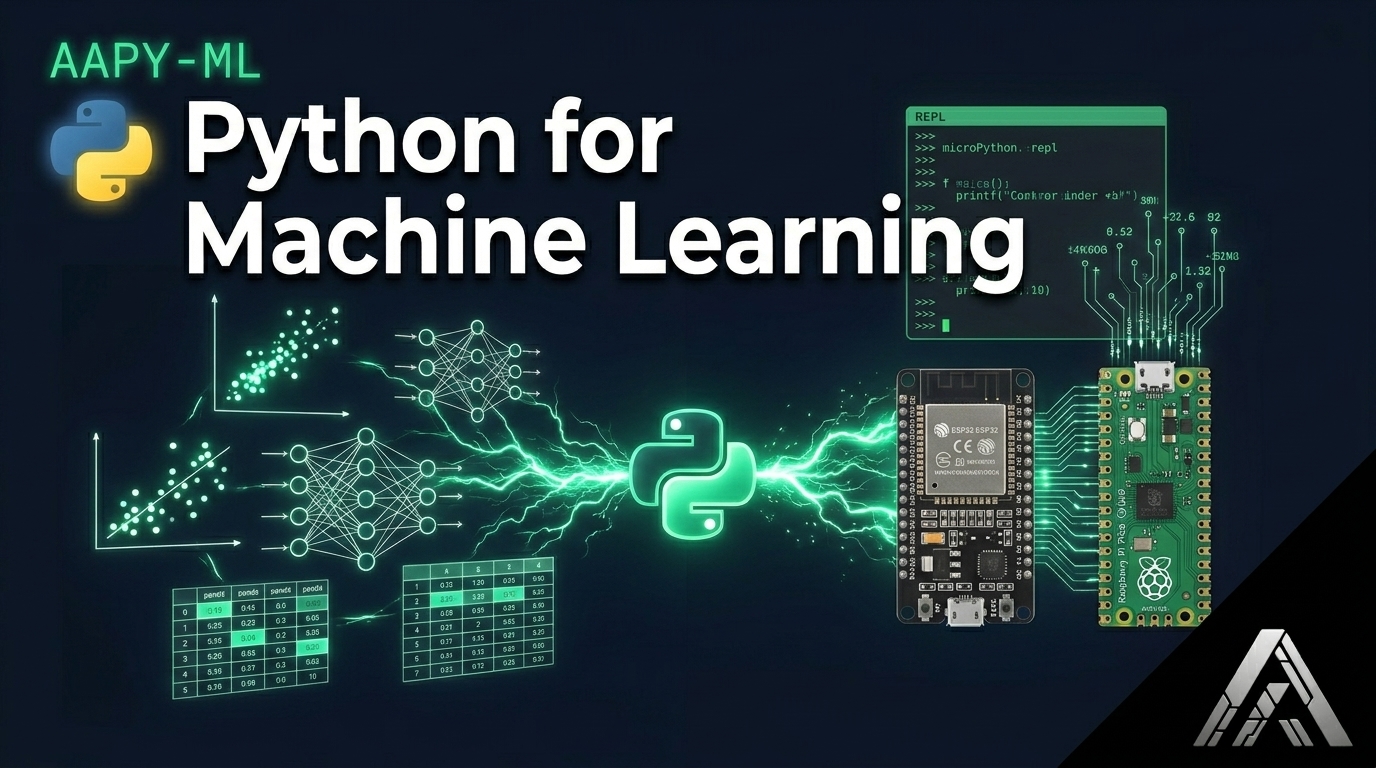
Python for Machine Learning

Provided By
Prof Obaid Shah
What is Python for Machine Learning?
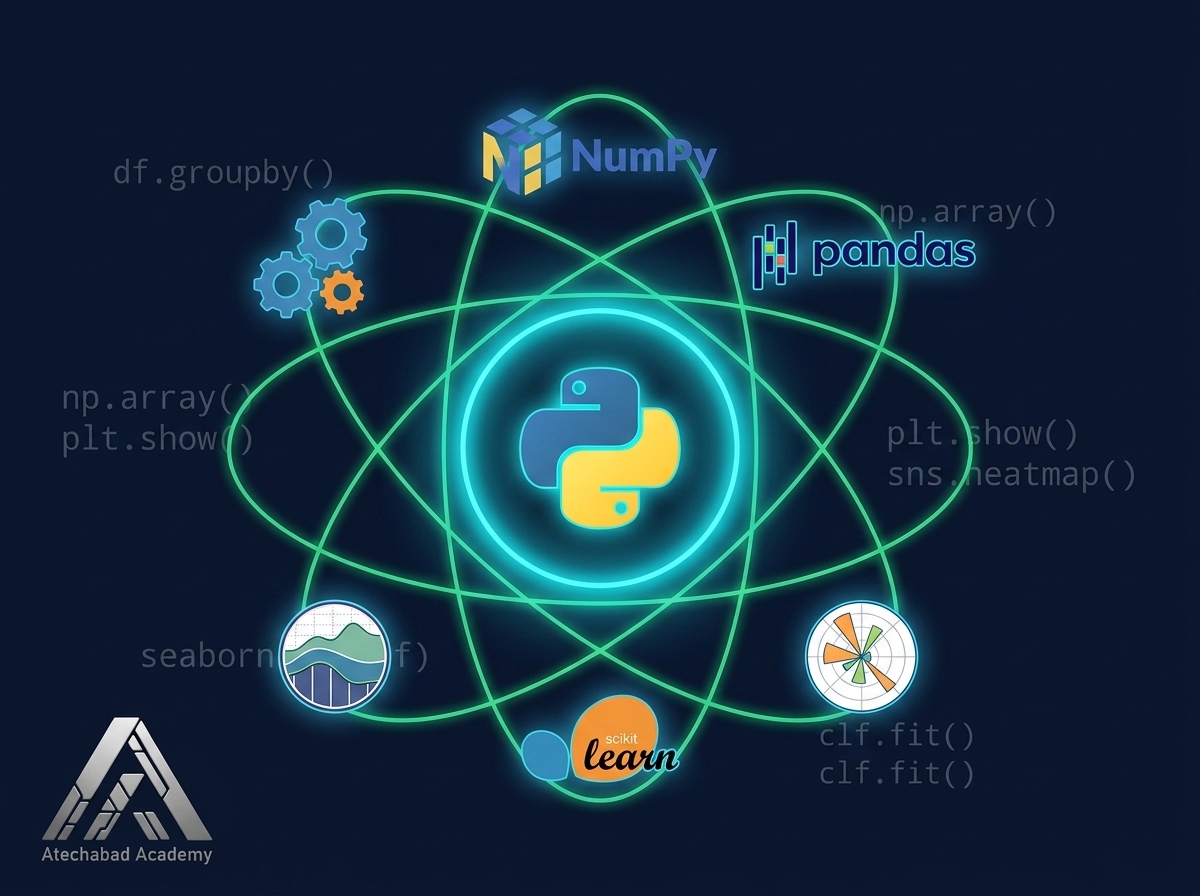
Python for Machine Learning is a comprehensive course that teaches students how to use Python — the world's most popular AI/ML language — to build intelligent systems. From data manipulation and visualization to training real machine learning models, this course covers the complete pipeline a data scientist or ML engineer uses daily. Students will work with industry-standard libraries including NumPy, Pandas, Matplotlib, Scikit-learn, and get an introduction to deep learning with TensorFlow/Keras.
What You Will Learn:
- Master Python fundamentals essential for ML workflows
- Manipulate and analyze data with NumPy and Pandas
- Visualize data with Matplotlib and Seaborn
- Understand and implement core ML algorithms
- Build classification, regression, and clustering models
- Evaluate and optimize model performance
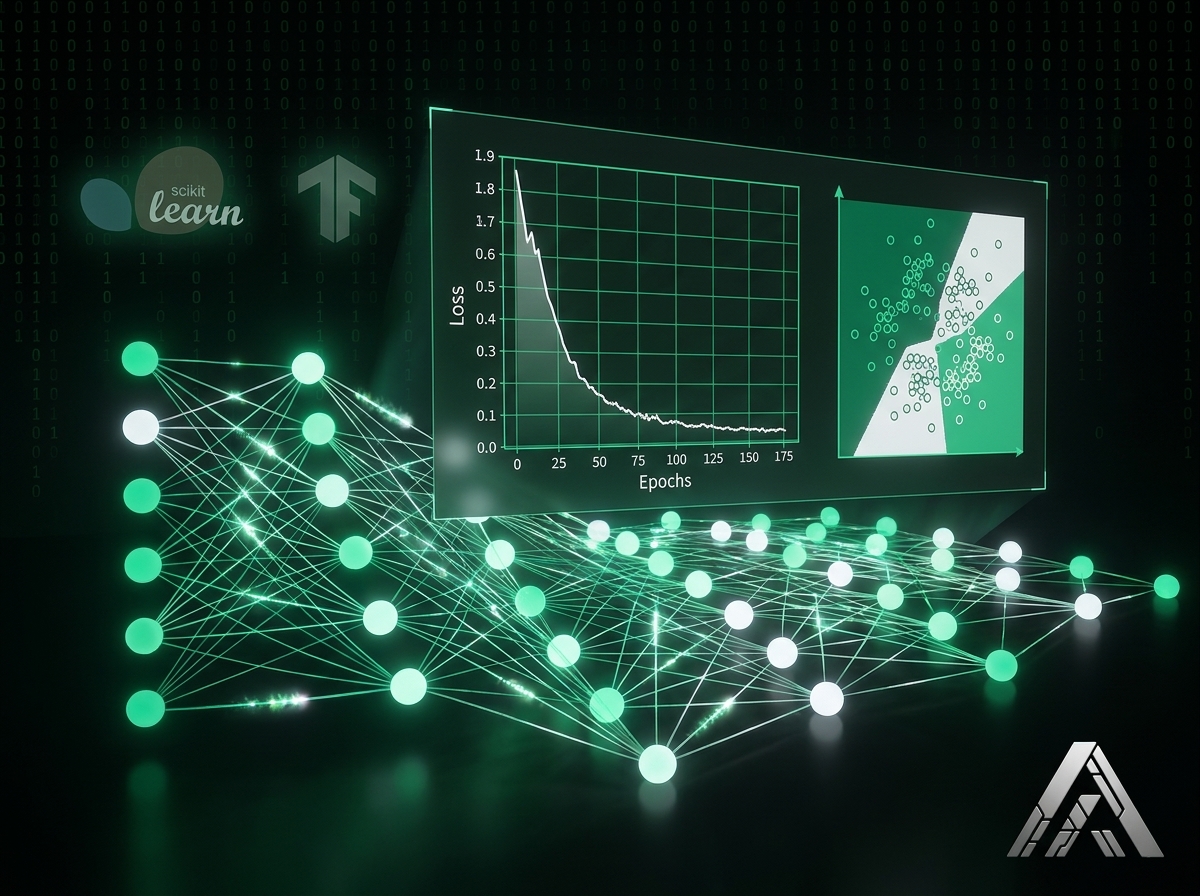
- Introduction to Neural Networks with TensorFlow/Keras
- Work with real-world datasets end-to-end
- Write MicroPython for microcontrollers (ESP32, Pi Pico) — running ML at the edge
Who Is This Course For?
Ideal for CS students, data enthusiasts, engineers, and anyone wanting to break into Machine Learning, Data Science, or AI. Basic Python knowledge is helpful but the course starts from the essentials.
Module 1 — Python Essentials for ML Variables, data types, loops, functions, list comprehensions, OOP basics, file I/O, virtual environments, pip packages.
Module 2 — NumPy for Numerical Computing Arrays, array operations, broadcasting, slicing, linear algebra with NumPy, random number generation.
Module 3 — Pandas for Data Manipulation DataFrames, Series, reading CSV/Excel, data cleaning, filtering, groupby, merging, handling missing values.
Module 4 — Data Visualization Matplotlib — line, bar, scatter, histogram plots. Seaborn — heatmaps, pairplots, distribution plots. Storytelling with data.
Module 5 — Machine Learning Fundamentals What is ML, supervised vs unsupervised vs reinforcement learning, train/test split, overfitting, underfitting, bias-variance tradeoff.
Module 6 — Supervised Learning Linear regression, logistic regression, decision trees, random forests, SVM, KNN — theory + implementation with Scikit-learn.
Module 7 — Unsupervised Learning K-Means clustering, hierarchical clustering, PCA for dimensionality reduction, anomaly detection.
Module 8 — Model Evaluation & Optimization Confusion matrix, accuracy, precision, recall, F1 score, ROC-AUC, cross-validation, GridSearchCV, hyperparameter tuning.
Module 9 — Neural Networks with TensorFlow/Keras Perceptron, activation functions, feedforward networks, backpropagation, building and training ANN with Keras, image classification basics.
Module 10 — MicroPython for Microcontrollers What is MicroPython, installing on ESP32 and Pi Pico, GPIO with MicroPython, reading sensors, running lightweight ML inference on edge devices with TensorFlow Lite Micro.